
Insights &
Reflections
Explore articles on personal growth, education, and the philosophy of living fully.
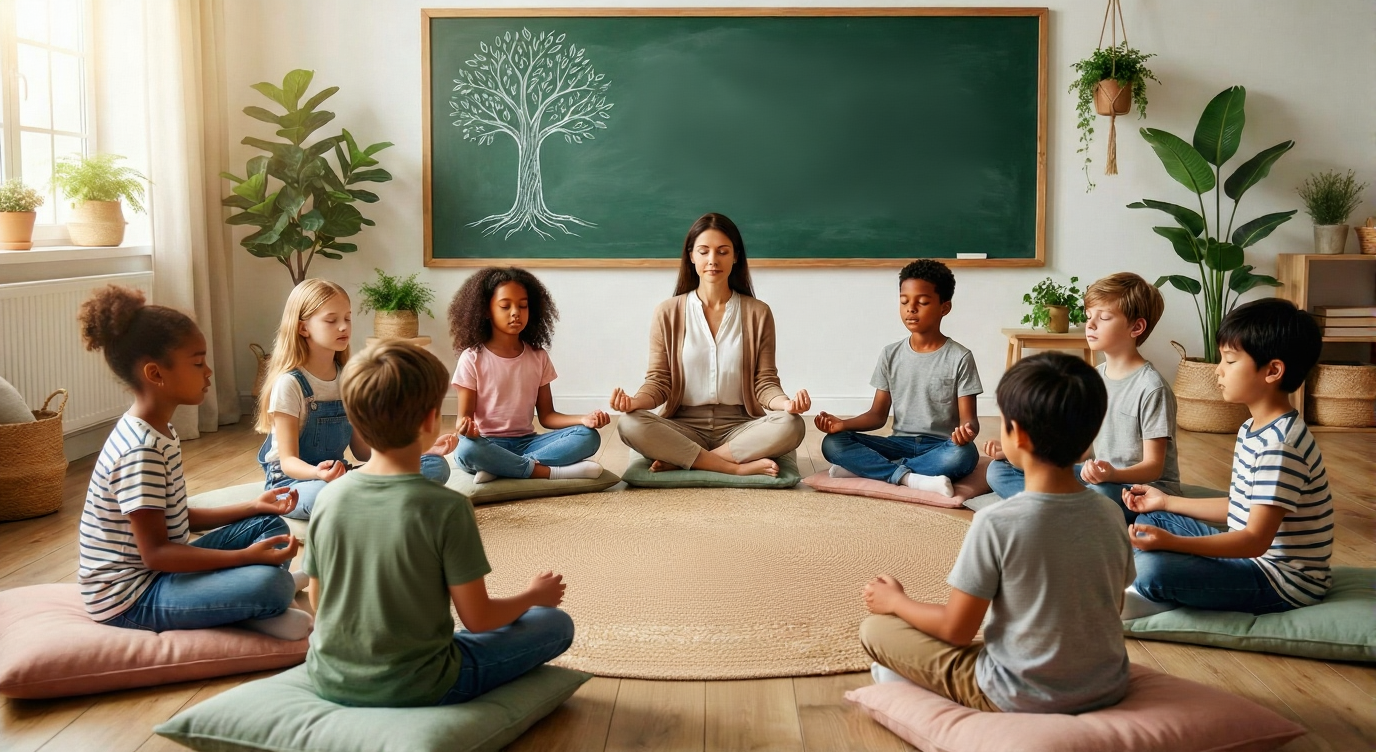
The Art of Mindfulness in Education
Mindfulness has rapidly become one of the most transformative approaches in modern education. As students today face increasing levels of stress, distraction, and academic pressure, mindfulness offers a simple yet powerful tool to build mental clarity and emotional resilience. At its core, mindfulness teaches students to observe their thoughts, feelings, and surroundings without judgment, allowing them to stay grounded in the present moment. In classrooms where mindfulness is practiced, teachers often report noticeable improvements in student focus and overall behavior. When students learn to pause, breathe, and reconnect with the moment, they become better equipped to handle frustration, maintain concentration during lessons, and engage more deeply with their studies. This shift creates a learning environment that is calmer, more respectful, and more conducive to meaningful learning. Research suggests that mindfulness directly enhances memory retention, decision-making, and creativity. Students who practice mindfulness regularly show better emotional regulation, reduced anxiety, and an increased ability to cope with academic challenges. Rather than reacting impulsively, they begin to respond thoughtfully—an essential skill not only for school but for life. Teachers also benefit from incorporating mindfulness into their daily routines. A mindful educator can create a nurturing, balanced classroom atmosphere where learning feels joyful rather than stressful. By modeling calmness and presence, teachers inspire students to develop the same qualities. This mutual growth strengthens the teacher-student relationship and fosters trust, empathy, and collaboration. Mindfulness also helps students understand themselves better. When they learn to observe their internal world, they become aware of what triggers stress, what motivates them, and what helps them stay focused. This self-awareness builds confidence and emotional intelligence, making students more prepared for personal and academic success. In essence, mindfulness is not just a practice—it is a mindset. It encourages students to slow down in a fast-paced world, to listen more deeply, and to engage with learning in a more authentic way. By integrating mindfulness into education, we are not only improving academic performance but also nurturing healthier, more emotionally balanced individuals who are better prepared to navigate the challenges of life.

Navigating Parenthood with Conscious Awareness
Parenthood is one of the most profound journeys a person can experience, yet it often unfolds without a clear roadmap. In today’s fast-paced world, conscious awareness becomes an essential ingredient in raising emotionally healthy and confident children. Conscious parenting is not about being a “perfect” parent; rather, it is about being present, attentive, and emotionally grounded as we guide our children through life. At its heart, conscious parenting emphasizes understanding rather than controlling. Children, especially in their early years, are highly sensitive to the emotional environment around them. When parents learn to regulate their own emotions, they create a safe space where a child can express themselves freely without fear of judgment. This shift from reaction to reflection encourages deeper communication and strengthens the bond between parent and child. One of the key principles of conscious awareness is observing your child with curiosity rather than expectation. Every child has a unique personality, pace, intelligence, and emotional rhythm. When parents attempt to impose rigid expectations, children often suppress their natural creativity and authenticity. By practicing mindful listening, parents can better understand what their child is truly feeling or needing at any given moment. Conscious parenting also involves noticing our own triggers. Many reactive behaviors in parents—anger, frustration, impatience—stem from unresolved emotional patterns or stress. When we bring awareness to these triggers, we begin to break generational cycles and respond with compassion instead of reaction. This not only benefits the child but also supports the parent’s emotional growth. A central goal of conscious awareness is helping children develop emotional intelligence. When a child learns to name their feelings, communicate respectfully, and navigate challenges without fear, they develop lifelong resilience. Parents can model this by expressing their own emotions in healthy ways—acknowledging stress, taking mindful pauses, and showing vulnerability when appropriate. Daily routines also offer opportunities to practice conscious presence. Simple activities like shared meals, bedtime conversations, or nature walks can become moments of true connection when approached with full attention. Rather than multitasking or rushing, slowing down and engaging mindfully helps children feel valued and understood. Ultimately, conscious parenting is a journey of mutual growth. As parents become more self-aware, children naturally mirror this emotional clarity. The goal is not to eliminate challenges but to approach them with patience, empathy, and open communication. With conscious awareness, the parenting experience becomes more joyful, nurturing, and deeply fulfilling.

Osho on Creativity and Intelligence
Osho’s teachings on creativity and intelligence offer a refreshing perspective that challenges traditional ideas about success and knowledge. He believed that creativity is not limited to artistic expression; rather, it is the natural flow of human intelligence when it is free, spontaneous, and deeply connected to the present moment. According to Osho, true intelligence arises when the mind is quiet, aware, and open to exploration. Conventional education often emphasizes memorization and obedience, which restrict creative thinking. Osho argued that when the mind becomes overloaded with conditioned ideas, genuine intelligence cannot flourish. Creativity requires space, silence, and the freedom to question. One of Osho’s core messages is that creativity is an expression of one’s inner being. When a person is fully alive and connected to themselves, creativity emerges effortlessly—whether through art, problem-solving, innovation, or relationships. He believed that intelligence is not something acquired from outside; it is inherent within every individual. The role of education, therefore, should be to cultivate this inner intelligence rather than suppress it. Osho also highlighted the importance of meditation as a path to awakening creativity. Meditation helps dissolve mental noise, allowing a person to engage with life more deeply and consciously. In this state of awareness, inspiration flows naturally, and individuals begin to act from intuition rather than fear or comparison. Creativity, for Osho, is not about producing something; it is about living life with sensitivity and totality. Another powerful idea from Osho is that creativity thrives when there is no fear of failure. Society often conditions people to prioritize success, leading them to avoid risks or unconventional paths. Osho emphasized embracing mistakes as essential steps in the creative journey. When people stop judging themselves, they unlock new dimensions of intelligence and innovation. Osho believed that a creative person lives with freshness—a sense of curiosity and wonder about life. Instead of repeating old patterns, they explore new possibilities. This openness leads to emotional freedom, intellectual growth, and a deeper connection to one’s authentic self. In essence, Osho teaches that creativity is the highest form of intelligence because it transforms life itself. It invites us to live more consciously, courageously, and joyfully. When we embrace creativity not as an ability but as a way of being, we discover the limitless potential within us.

Emotional Intelligence in the Workplace
Emotional intelligence (EQ) has become one of the most essential skills in the modern workplace. While technical abilities and academic qualifications remain important, they are no longer the strongest predictors of long-term success. Today, organizations value individuals who can understand emotions, communicate effectively, solve conflicts gracefully, and maintain healthy working relationships. At its core, emotional intelligence involves five key abilities: self-awareness, self-regulation, empathy, motivation, and social skills. These qualities shape the way people handle stress, adapt to change, and collaborate with others. Employees with high EQ are often better leaders because they can inspire trust, communicate clearly, and make thoughtful decisions even in challenging situations. Self-awareness is the foundation of EQ. When individuals understand their strengths, weaknesses, and emotional patterns, they are better prepared to respond rather than react. This reduces workplace conflicts and increases personal productivity. Self-regulation further strengthens this by helping employees manage emotional triggers and maintain professionalism. Empathy is another powerful aspect of workplace EQ. It enables individuals to understand different perspectives, connect with colleagues, and create supportive environments. Empathy leads to better teamwork, as employees feel valued and understood. In leadership roles, empathy fosters loyalty and boosts morale. Motivation, from an EQ perspective, is driven by internal goals rather than external rewards. Emotionally intelligent employees are more focused, resilient, and committed to self-improvement. They approach tasks with enthusiasm and maintain a positive attitude even during setbacks. Social skills complete the EQ framework by enabling effective communication, collaboration, and relationship-building. Employees who master these skills resolve conflicts constructively and contribute to a harmonious workplace culture. Developing emotional intelligence is a lifelong process, but it can be cultivated with self-reflection, mindfulness practices, and active listening. As workplaces continue to evolve, EQ remains a critical skill that empowers individuals to thrive professionally and personally.

Holistic Health: Mind, Body, and Spirit
Holistic health is a philosophy that views well-being as the balanced integration of mind, body, and spirit. Rather than focusing only on physical symptoms, holistic wellness addresses emotional, mental, and spiritual harmony. In today’s demanding world, this approach has become increasingly important as people seek deeper connection, inner peace, and long-term vitality. The mind plays a central role in shaping our overall health. Thoughts, beliefs, and emotional patterns significantly influence stress levels, energy, and physical well-being. Practices such as meditation, journaling, and mindfulness help strengthen mental clarity and emotional resilience. When the mind is calm and focused, the body naturally functions better. The body, meanwhile, requires nourishment, movement, and rest. A holistic approach emphasizes balanced nutrition, physical activity, and adequate sleep—all essential for maintaining strength and immunity. Listening to the body’s signals, rather than pushing it beyond limits, fosters a healthier and more sustainable lifestyle. The spirit represents our sense of meaning, purpose, and inner connection. Activities like prayer, yoga, nature walks, or creative expression nourish the spirit and help individuals feel more grounded. When spiritual well-being is strong, people experience greater joy, compassion, and alignment with their values. Holistic health recognizes that these three elements—mind, body, and spirit—are deeply interconnected. Stress in one area often affects the others. For example, emotional stress can lead to physical symptoms, while poor physical health can impact self-esteem and emotional balance. Adopting a holistic lifestyle does not require drastic changes. Small, consistent practices such as mindful breathing, balanced meals, gratitude journaling, and regular exercise can significantly improve well-being. The goal is not perfection but harmony—listening to oneself and making intentional choices that support overall health. In essence, holistic health invites individuals to live with awareness, balance, and self-compassion. When mind, body, and spirit are aligned, life becomes more vibrant, peaceful, and fulfilling.

The Future of Learning: Beyond Textbooks
Education is undergoing a profound transformation, shifting far beyond the limitations of traditional textbooks. In a world driven by technology, personalization, and global connectivity, the future of learning emphasizes creativity, critical thinking, and real-world skills. Students today need more than memorized information; they require meaningful experiences that prepare them for an evolving world. Experiential learning is at the heart of this change. Through hands-on activities, project-based tasks, and interactive environments, students gain practical understanding that extends beyond theory. This approach helps learners retain knowledge more effectively and develop deeper curiosity. Technology also plays a major role in shaping the future of education. Tools like virtual reality, AI learning assistants, simulation-based training, and digital collaboration platforms allow students to explore subjects in immersive ways. Personalized learning systems adapt content to each student’s pace and style, ensuring that no one is left behind. The role of teachers is transforming as well. Instead of being information providers, teachers are becoming facilitators and mentors—guiding students to think independently, ask meaningful questions, and solve complex problems creatively. This shift empowers students to take ownership of their learning journey. Collaboration is another essential feature of future-ready learning. Students work in teams, share ideas, and develop important social and communication skills. These abilities prepare them for workplaces where teamwork, adaptability, and emotional intelligence are highly valued. The future of learning also emphasizes emotional well-being. Schools are integrating mindfulness, social-emotional learning, and personalized support to help students grow not just academically but also mentally and emotionally. Overall, moving beyond textbooks means embracing a more dynamic, connected, and student-centered model of education. This future encourages innovation, expands possibilities, and equips students with the tools they need to thrive in a rapidly changing world.